
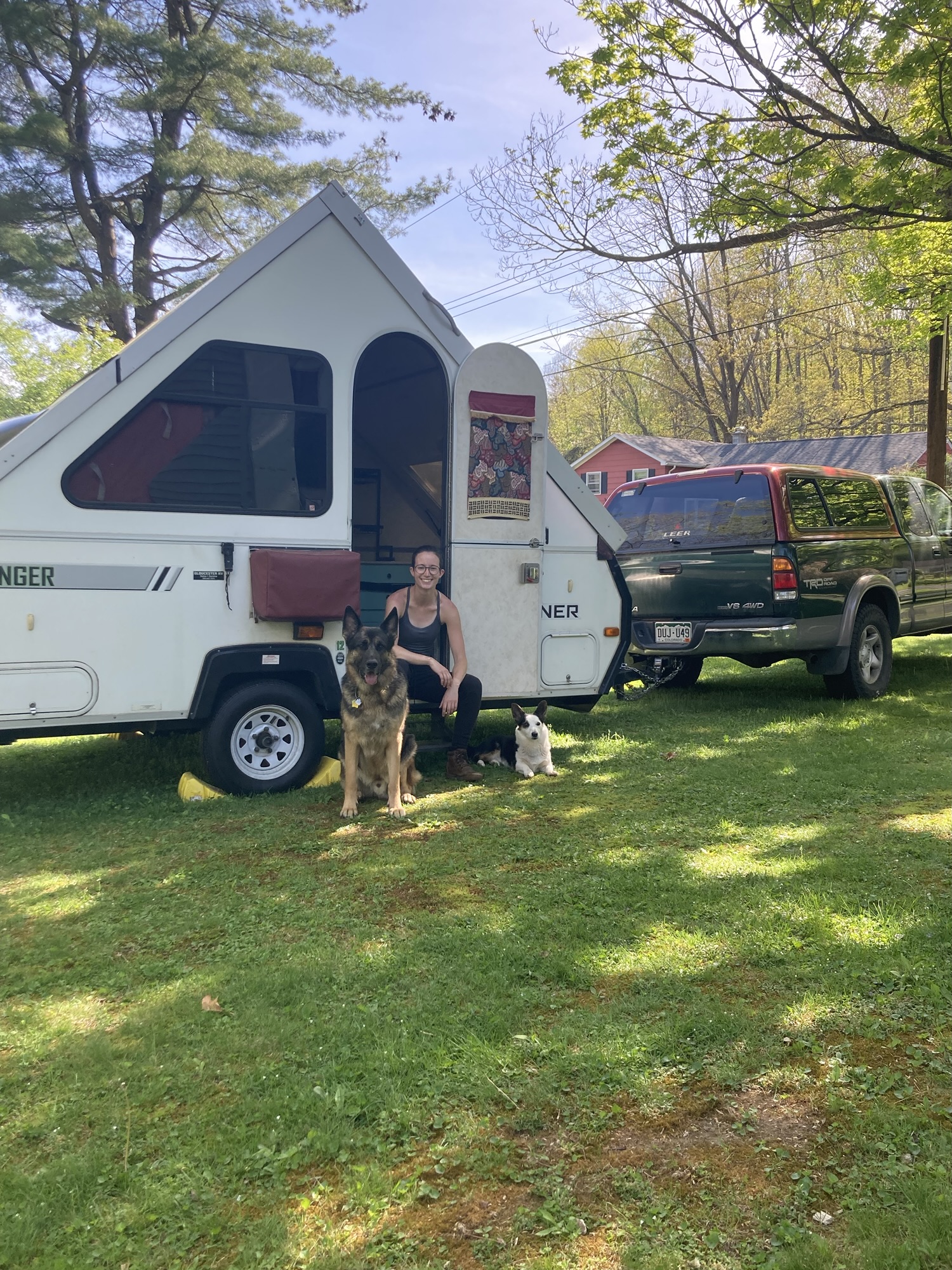
Road-tripping with dogs can be a fantastic way to explore new places, but can also be fraught with complications and stress. Here’s my top tips to help your travel go smoothly.
Safety First
Anyone who drives knows the risks of being on the road. There are also additional risks to consider with dogs, such as heat and containment.
Car Safety: Heat
We have likely all heard about the risks of leaving your dog or child in a hot car. But what to do when you have to run to the restroom, or to get gas? Here’s my top tips for managing solo travel with your dog:
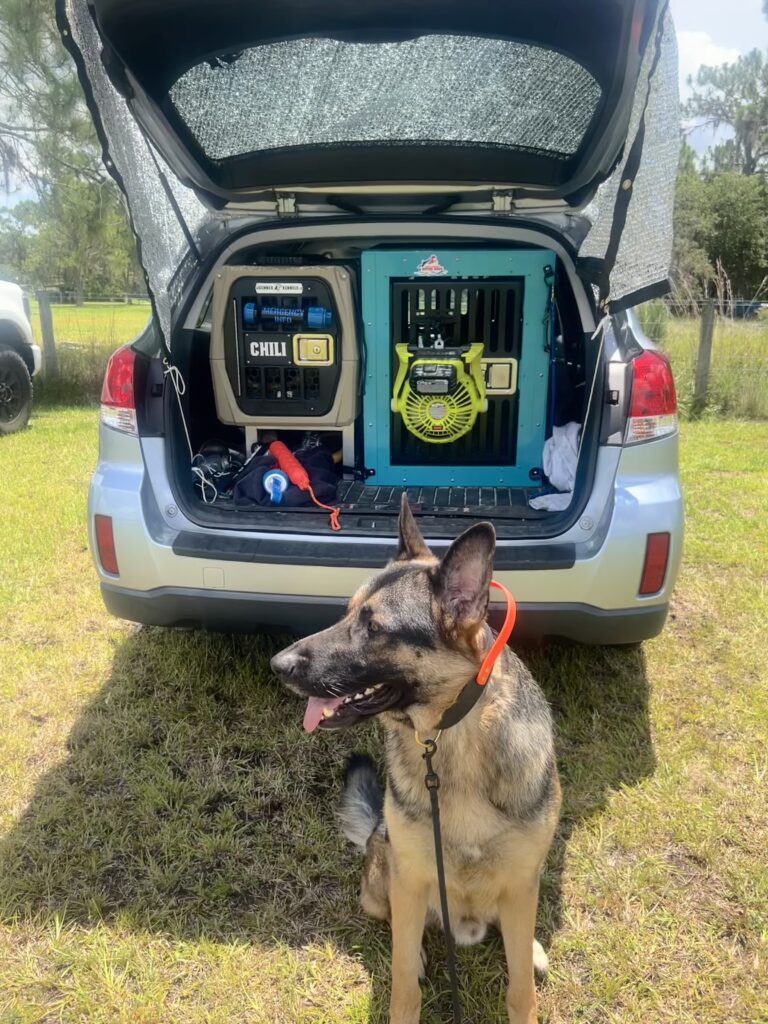
- Have a ventilation system
- This doesn’t have to be fancy, but having a portable battery fan can make all the difference in keeping your dogs comfortable during short stops. Crack your windows, point the fan at your dogs, and make your run. My favorite battery fan is the Ryobi, with powerful breeze, a super long rechargeable battery life, and a convenient hook to hang it.
- Have a shade system
- Using a windshield sun reflector and cheap aluminet can make a drastic difference in temperature inside the car. I love aluminet because it’s easy and cheap to get, comes in a variety of sizes, and has handy rings in the sides to thread guy lines, carabiners, or whatever you have on hand to rig it up. Pro tip: grab a couple magnetic hooks from amazon, stick to the roof and sides of your car, and hang your aluminet!
- Have a plan
- I always make sure I have a plan when traveling with dogs, so that I never end up having to leave them more than 5 minutes to run inside. Curbside pickup is a great way to get essentials without having to get out. Many rest and truck stops have nice shady spots to park, and places to walk your dog.
Car Safety: Containment
Just as young children require car seats and everyone is required to wear a seat belt, it’s important to think about your dog’s safety in the car. There are a variety of options, varying in safety, but the more protection you can provide, the less likely you are to lose your dog in the event of an accident. Car hammocks, seat belts, and crates are some examples of containment systems with varying levels of safety. Choose what works best for your situation and car setup, and have a plan if you get into an accident.
My pick: Ruffland and Gunner car crates. Top of the line safety and containment for your dog, and can easily be taken out for cleaning.
Managing Stress
While traveling with your dog can be a fun and rewarding experience, it can also be stressful for both of you. New environments and problem-solving can test even the most solid relationship.
The Importance of Slowing Down
It’s tempting to try to do everything while traveling, to “make the most” of the trip. But this can lead to burnout and frustration on both your parts. It’s okay to take it slower and maybe miss some things in favor of keeping your dog stress-free. Dogs only know the world that we show them — they don’t know what they may be “missing out on,” only what they got to do with you!
Setting Expectations
Traveling inherently involves navigating new environments. Dogs are creatures of routine and poor generalizers, and even the most socialized, well-behaved dog can get overstimulated while traveling. It’s important to not expect perfection from our dogs, and give them some leeway while they’re learning what the rules are in these new places. Reinforce the behaviors you want, practice behaviors they know well, and don’t be afraid to pull back to basics if you see they’re struggling.
Planning Ahead
Not all travel is created equal. Some is vastly more suited to dogs than others. If you genuinely want to experience traveling with your dog, it’s important to actually pick a trip that meets your needs. For a first-time adventurer, I would never suggest a National Park like Yellowstone or Rocky Mountain for your first trip. You’ll spend the time stuck on paved paths or your campsite, unable to enjoy the best parts of the park without a serious way to keep your dog in your rig (i.e. pro camper vans with AC, temperature monitors, etc.). Pick something that’s going to be accessible, meets your skill level, and that you know your dog will enjoy.
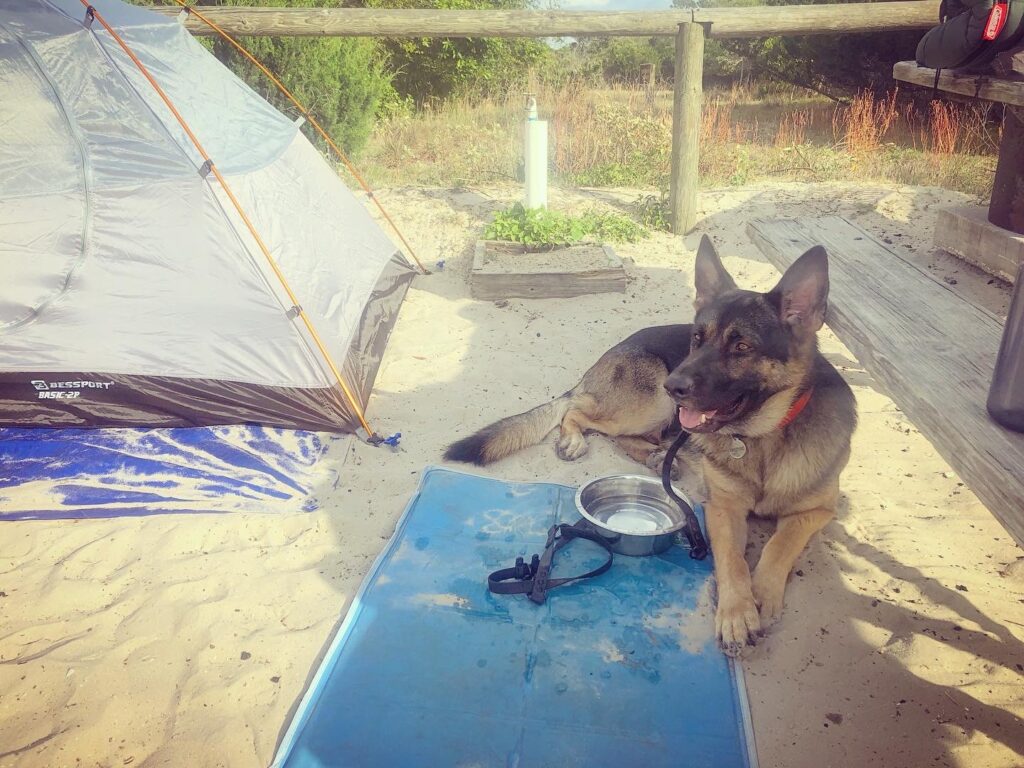
My favorite way to take a quick trip with the dogs is to camp at a local state park. The drive is usually short, the facilities modern and clean, and there is plenty of room to relax and explore in equal measure. I once spent part of the summer road-tripping with my Shepherd up and down the East Coast only using state parks. I kept each drive day to under 6 hours, did my adventuring in the morning, ate lunch in a dog-friendly spot midday, and spent the afternoons after checking in relaxing at the campsite, allowing my dog to nap and recharge. It’s still in my books as the best trip I’ve ever taken.
Conclusions
Traveling with dogs via car can be an awesome way to explore new places without having to leave your dog at home. However, there are many things to take into consideration when embarking for the mental and physical health of your dog. Always have a plan, put your dog first, and focus on the journey, not the destination.
Leave a Reply